
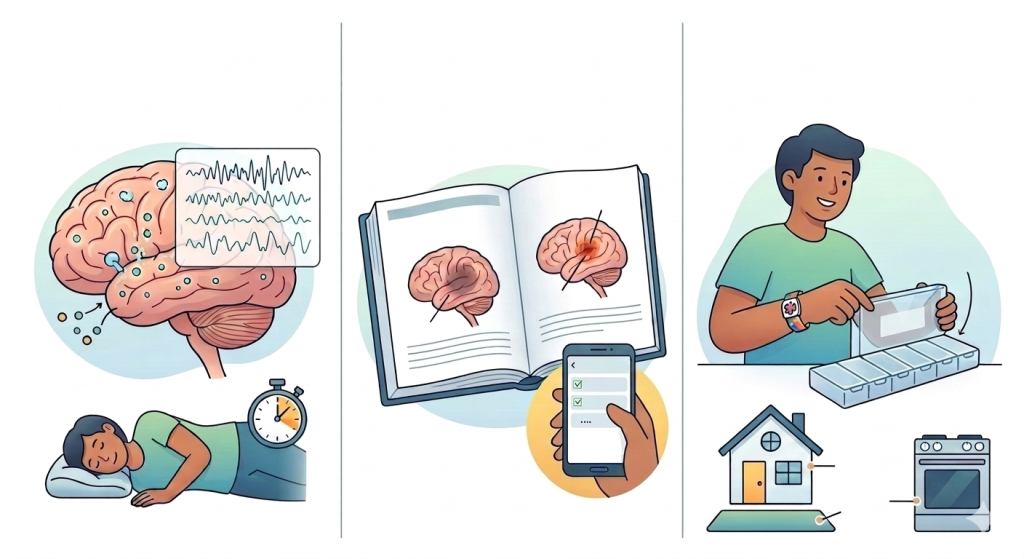
A stroke occurs when blood flow to a part of the brain is interrupted or reduced, depriving brain tissue of oxygen and nutrients. Within minutes, brain cells begin to die. Because every second counts, recognizing the early symptoms can save a life or prevent permanent disability. Medical professionals recommend using the B.E. F.A.S.T. acronym to quickly identify the most critical warning flags.
The 5 Critical Warning Signs of a Stroke
- B – Balance Loss: Look out for a sudden loss of balance, unexplained dizziness, or an abrupt lack of coordination that makes it difficult to walk straight.
- E – Eye and Vision Changes: Pay immediate attention to sudden blurred vision, double vision, or a complete loss of sight in one or both eyes.
- F – Face Drooping: Watch for numbness or drooping on one side of the face. If you ask the person to smile, their smile will appear uneven or lopsided.
- A – Arm Weakness: Check for weakness or numbness in the limbs, typically isolated to one side of the body. Ask the person to raise both arms; if one arm drifts downward involuntarily, it is a primary warning sign.
- S – Speech Difficulty: Listen for slurred words, difficulty forming coherent sentences, or sudden confusion that makes it hard to understand spoken language.
What to Do If You Notice These Signs
The final letter of the acronym stands for T – Time to call emergency services. If you or someone around you exhibits any of these symptoms—even if they disappear after a few minutes—you must call emergency services immediately. Short-lived symptoms often indicate a Transient Ischemic Attack (TIA), commonly known as a “mini-stroke,” which serves as a critical warning for a future, severe stroke. Never wait to see if the symptoms improve on their own; immediate medical evaluation is essential.